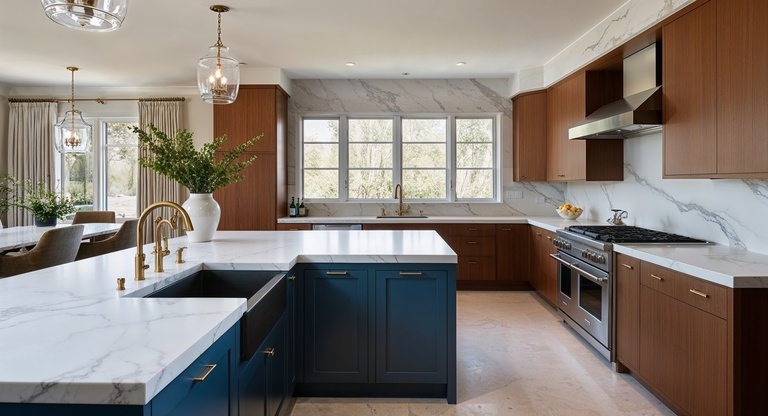
Fluted veneered MDF panels are not just a decorative feature—they are a powerful design tool that can transform the look and feel of a space. With thoughtful application, they can enhance proportions, improve acoustics, and create a cohesive aesthetic.
Feature Walls
One of the most effective ways to use these panels is as a feature wall. Placing them behind a bed, sofa, or TV unit creates a focal point that draws attention without overwhelming the room.
The vertical lines of the fluting can make ceilings appear higher, which is especially useful in smaller spaces, creating a subtle effect offorced perspective, a visual technique that manipulates perception to enhance the sense of height and depth.
Zoning and Space Division
In open-plan interiors, fluted panels can be used to define different zones. For example, they can separate a living area from a dining space without the need for solid walls.
This approach maintains an open feel while adding structure and organization to the layout.
Furniture Integration
Fluted veneered MDF panels can also be incorporated into furniture design. Cabinet doors, kitchen islands, and wardrobes with fluted finishes create a cohesive look when matched with wall panels.
This continuity helps unify the design and gives the space a more polished appearance.
Color and Finish Choices
Choosing the right veneer is essential. Light woods like oak create a bright and airy atmosphere, while darker finishes like walnut add depth and luxury.
Matte finishes are generally preferred, as they highlight the texture without reflecting too much light.
Lighting Techniques
Lighting plays a crucial role in enhancing fluted panels. Wall washers, LED strips, and directional spotlights can emphasize the grooves, creating dramatic shadow effects.
Proper lighting can turn a simple wall into a striking design feature.
Combining with Other Materials
Fluted panels work well alongside other materials. Pairing them with marble, metal accents, or soft textiles can create a balanced and layered interior.
For example, combining wood panels with black metal elements can result in a modern, industrial look.
Practical Considerations
Before installation, it’s important to consider the room’s conditions. While veneered MDF is relatively stable, it should still be protected from excessive moisture.
Proper installation and finishing will ensure longevity and maintain the panels’ appearance over time.
Plumbing systems require different pipe materials because their specific applications and water pressure levels and installation requirements dictate which materials to use. The different materials provide various benefits and so the proper material selection needs to occur because it determines the material’s ability to withstand time and use.
The choice of pipes determines how much maintenance work is required and what expenses will occur and which materials will resist corrosion or sustain damage. The plumbing systems of homes and businesses use multiple materials because they require more than just one type of pipe.
Why Pipe Material Selection Matters
The selection of pipe material determines how well a plumbing system will function throughout its operational period. The pipes’ lifespan gets affected by factors like water quality and temperature and pressure levels and environmental exposure.
Using the wrong material results in problems which include leaks and corrosion and decreased water flow and the need for constant maintenance. The correct choice of materials enables systems to operate properly while minimizing the amount of maintenance that needs to be performed.
Common Pipe Materials Used in Plumbing
PVC Pipes (Polyvinyl Chloride)
Plumbers frequently use PVC pipes for their drainage and waste water piping needs because of their lightweight design and simple installation process and their ability to resist corrosion.
The pipes serve cold water systems because they cannot withstand high temperatures. PVC pipes function as external drainage systems and underground piping materials which are found in numerous residential plumbing systems.
Advantages of PVC pipes:
Lightweight and easy to handle
Resistant to corrosion and chemicals
Low cost compared to metal pipes
Smooth internal surface for better flow
CPVC Pipes (Chlorinated Polyvinyl Chloride)
CPVC pipes essentially serve the same purpose as PVC pipes, but at greatly elevated temperature levels. The pipes serve as a standard component in both hot water systems and cold-water systems.
The pipes function as a common plumbing material for home use because they provide strong durability and simple installation methods. CPVC pipes show better temperature handling capabilities when compared to standard PVC.
Advantages of CPVC pipes:
Suitable for hot and cold water
Good resistance to corrosion
Easy to install and maintain
Long service life
Copper Pipes
Copper pipes have been used in plumbing systems for many years and are known for their durability and reliability. They are commonly used in water supply lines.
Copper is resistant to bacteria and can handle both high temperatures and pressure. However, it is more expensive compared to plastic piping options.
In some older installations, copper piping is still in good condition even after long periods of use.
Advantages of copper pipes:
High durability and strength
Suitable for hot and cold water
Resistant to corrosion and bacteria
Can handle high pressure
PEX Pipes (Cross-Linked Polyethylene)
PEX pipes function as flexible plastic piping which plumbers increasingly utilize in contemporary plumbing systems. They are commonly used for water supply lines inside buildings.
The system needs fewer joints because of its flexible design which decreases the possibility of leaks. PEX material shows resistance against both scale and chlorine substances.
The material becomes the preferred choice for new installations because its properties make it easier to handle and reduce installation time.
Advantages of PEX pipes:
Flexible and easy to install
Fewer joints required
Resistant to scaling and chlorine
Suitable for hot and cold water
Galvanized Steel Pipes
Older plumbing systems used galvanized steel pipes as their standard piping material. The pipes have a zinc coating which protects them from corrosion.
Pipes develop internal corrosion over time which decreases their ability to transport water and creates potential for leaks. The material has become less frequently used for fresh installations.
Old piping systems continue to operate in historic buildings because the pipes require their first replacement after extended operating periods.
Advantages of galvanized steel pipes:
Strong and durable
Suitable for high-pressure systems
Long-lasting in earlier years of use
Cast Iron Pipes
Drainage systems and sewage systems depend on cast iron pipes as their primary piping material. The pipes possess considerable weight and strength characteristics which make them appropriate for use in subterranean environments.
The drainage systems maintain their operational functionality through their lasting construction materials and their sound-absorbing properties. The installation process becomes more challenging because of the weight of these materials.
In many older buildings, cast iron pipes are still in use for waste lines.
Advantages of cast iron pipes:
High strength and durability
Good noise reduction
Suitable for underground drainage
Long service life
Factors Affecting Pipe Material Selection
Selecting the right pipe material depends on several practical factors. These should be considered during installation to ensure long-term performance.
Some important factors include:
Type of application (water supply or drainage)
Temperature of water
Pressure requirements
Installation location (indoor or outdoor)
Cost and availability
In most systems, different materials are used together to match specific requirements.
When to Replace Old Pipes
The materials used in older plumbing systems have become outdated according to present conditions. The pipes will start to develop problems which include corrosion and leakage and blockages as time goes by.
The following signs indicate that pipes require replacement:
Reduced water pressure
Discolored water
Frequent leaks
Visible corrosion
Replacing outdated materials with modern options can improve system performance and reduce maintenance issues.
Summary
Plumbing systems commonly use six pipe materials which are PVC, CPVC, copper, PEX, galvanized steel, and cast iron. The properties of each material together with its specific applications and operational requirements give different material benefits.
Pipe material selection becomes critical because it affects pipe durability, water flow efficiency, and pipe damage protection. Plastic pipes have become the preferred choice for contemporary systems because they are simple to install and resist corrosion, but metal pipes still provide benefits to specific use cases.
The correct selection and installation process, in addition to proper maintenance of plumbing pipes, establishes reliable system performance, which decreases the probability of leaks and system failures throughout time.
At Tradefox, understanding different pipe materials helps in selecting the right solution for each application. Choosing suitable plumbing pipes improves system durability and long-term performance.
The presence of mould in your home or office will lead to the appearance of small insects which will move through the contaminated space. These insects are commonly known as mould mites. The problem occurs frequently in humid areas which include Singapore. Most people in Singapore search for mould mite solutions yet they lack complete knowledge about the problem and its potential severity.
The blog explains mould mites through simple language which shows their relation to mould and their connection to commercial mould remediation which provides long-lasting results.
What Are Mould Mites?
Mould mites are extremely tiny insects that require humid and mould-filled spaces for their survival. The infestation starts with invisible signs, but it becomes apparent through the discovery of:
All-in-one white dots that move about the space.
Dust-like particles near mouldy areas
Increased activity in humid spaces
The mites consume mould because their survival depends on mould growth, which enables them to thrive in any location where mould develops.
Why Are Mould Mites Common in Singapore?
The hot temperatures and high humidity that Singapore experiences throughout the year create a climate which enables mould to grow. Mould mites establish their presence in these environments because they require mould as their primary food source.
Homeowners and businesses with ongoing moisture problems search for information about mould mites Singapore, which leads to the increasing search volume.
Common reasons include:
High humidity levels
Poor ventilation in indoor spaces
Frequent rainfall
Air-conditioning condensation
The various elements which contribute to mould expansion create conditions which result in the development of mould mites.
Are Mould Mites Harmful?
Mould mites do not present immediate threats to safety like other pests, but their presence creates problems which become worse when people fail to address them.
Allergies and Irritation
Mould mites can trigger allergic reactions in some people. Symptoms may include:
Sneezing
Itchy skin
Watery eyes
Breathing discomfort
Poor Indoor Air Quality
Since they live in mouldy areas, their presence often indicates unhealthy indoor conditions.
Fast Infestation
Mould mites multiply quickly. If mould is not treated, their population can grow rapidly.
The minor issues which you currently observe actually point to a more significant problem which exists as mould.
The Real Problem: Mould Growth
Mould mites exist as the first problem which needs solving. The existence of mould leads to their emergence. The problem will persist because you fail to treat the mould when you attempt to remove only the mites.
Mould can grow on:
Walls and ceilings
Wooden furniture
Carpets and fabrics
Air conditioning systems
Once it spreads, it becomes harder to control without proper treatment.
DIY Methods vs Professional Solutions
Many people try to solve mould and mite issues using home remedies or store-bought products. The solutions provide temporary relief but fail to address the fundamental problem.
DIY Methods
Cleaning with bleach
Using sprays or anti-mould solutions
Improving ventilation
These can help for small areas but may not be effective for deeper or hidden mould.
Why Commercial Mould Remediation Is Important
For long-term results, especially in offices, shops, or large spaces, commercial mould remediation is the best approach.
This process is more than just cleaning. It includes:
Detailed Inspection
Professionals check the entire area to identify visible and hidden mould.
Moisture Source Detection
They find out what is causing the dampness—leaks, humidity, or ventilation issues.
Advanced Treatment
Special equipment and solutions are used to remove mould completely.
Prevention Plan
Steps are taken to ensure mould does not return.
This is especially important for businesses because mould problems can affect employees, customers, and overall hygiene standards.
Signs You Need Commercial Mould Remediation
You should consider professional help if you notice:
Repeated mould growth even after cleaning
Large affected areas
Strong musty smell
Presence of mould mites in multiple spots
Health symptoms increasing indoors
In such cases, basic cleaning is not enough.
How to Prevent Mould and Mould Mites
Prevention is always better than cure. Here are some simple steps you can follow:
Control Humidity
Use dehumidifiers or air conditioners to keep moisture levels low.
Improve Ventilation
Open windows and ensure proper airflow in rooms.
Fix Leaks Immediately
Any water leakage should be repaired quickly.
Clean Regularly
Keep damp areas dry and clean to prevent mould buildup.
Check Hidden Areas
Inspect places like behind furniture, under carpets, and inside cabinets.
Why Businesses Should Take This Seriously
For commercial spaces, mould and mould mites are not just a cleanliness issue—they can impact:
Employee health and productivity
Customer experience
Brand reputation
That’s why investing in commercial mould remediation is not just a cost—it’s a long-term solution.
Final Thoughts
The problem of mould mites in Singapore occurs more frequently than the public believes because of the city’s humid weather conditions. Mould mites which have a tiny size, show that there exists a serious mould infestation that needs immediate attention.
The treatment process needs to address both the root cause of mould and the existing mite infestation. The temporary benefits of DIY methods will not match the complete protection which professional commercial mould remediation provides through its complete mould removal process.
You can protect your future resources by taking preventive measures at an early stage.
Houston runs on its own rhythm. Big personalities fill this city. Bold choices define its neighborhoods. From sprawling ranch houses to towering modern designs, homes here make statements. The city’s spirit demands houses that keep pace with its energy, ambition, and endless summer heat.
Space for Texas-Sized Living
Everything really is bigger in Texas, and Houston homes prove it. Families here spread out. They need room for holiday gatherings that spill from kitchen to patio. Game rooms handle rowdy Super Bowl parties. Three-car garages store trucks, boats, and weekend toys. But size alone doesn’t capture Houston’s style. These homes breathe differently. Tall ceilings create drama. Oversized windows flood rooms with light. Grand entryways suggest something unique is within. Texans embrace boldness, and their houses should reflect that.
The outdoor spaces matter just as much. Pool parties run from March through November here. Outdoor kitchens now compete with indoor ones. This includes pizza ovens and smokers for weekend brisket. The patios are spacious enough to fit dining sets, sofas, and TVs. The shaded outdoor room is the family’s favorite place when it’s 95 degrees.
Modern Comfort Meets Southern Charm
Nowhere else mixes the old and new like Houston does. Modern glass houses are near classic brick colonials. Both work because both reflect the city’s mix of innovation and tradition. Today’s designs use this heritage as a foundation to innovate. Stone and stucco exteriors are superior to wood siding for humidity. Metal roofs are stylish and long-lasting. Shiplap walls inside reflect Texas heritage. Quartz counters and islands offer modern luxury. This combination works well for a city that loves its past and future.
Smart technology weaves through these designs naturally. Automated blinds combat the afternoon sun. Multi-zone AC systems cool only occupied rooms. Pool equipment runs on smartphone apps. Houston homeowners embrace tech that makes life easier without shouting about it.
Building for Real Houston Weather
Let’s be honest about Houston weather. It’s hot. It’s humid. Hurricanes happen. Ignoring these facts leads to miserable living and expensive repairs. Clever designs cooperate with the climate, rather than fighting it. Deep roof overhangs shade the windows from the sun. Spray foam insulation traps that pricey cold air. Impact-resistant windows handle whatever storms throw at them. Elevated foundations protect against flooding while creating interesting split-level layouts. Materials matter here. Limestone stays cool. Brick handles moisture. Tile floors feel good on bare feet in August. These choices shape how homes look and how they live through long summers.
Making Your Vision Real
Houston offers something special for people ready to create their dream homes. If you want to build on your lot anywhere across the metro area, experienced builders like those at Jamestown Estate Homes can help because they understand local conditions. This freedom to choose both location and design opens possibilities that traditional home buying can’t match. The process starts with understanding how you actually live. Morning coffee on the porch? Kids’ homework at the kitchen island? Working from home three days a week? These daily patterns drive design decisions that matter.
Conclusion
Other cities play it safe with their architecture. Not Houston. This city celebrates individuals who dare to be different. Mediterranean villas rise next to industrial lofts. French country estates share streets with ultra-modern cubes. That’s Houston’s true essence: daring, self-assured, and unashamed. Whispering isn’t something houses do here. They present themselves with pride, both internally and externally. From architecture to colors to layouts, these houses echo the significant ambitions of their owners. Living in Houston means embracing this energy. The right home amplifies it, creating spaces where big dreams feel possible and bold choices feel natural.
Renting or leasing a property can be an exciting period, filled with the anticipation of starting anew in a place you can call home or build a thriving business. However, the dynamics between landlords, tenants, and external circumstances can sometimes bring challenges, making the experience less enjoyable. This is where the quiet enjoyment clause comes in—a vital aspect of lease agreements designed to protect tenants from unnecessary disruptions and ensure they can fully enjoy their rented space.
Understanding how this clause operates can empower tenants and clarify their rights. Below, we will explore the quiet enjoyment clause in depth and focus on its benefits, showcasing how it helps tenants enjoy a peaceful, uninterrupted occupancy.
What Does the Quiet Enjoyment Clause Mean?
At its core, the quiet enjoyment clause is part of most rental and lease agreements. It guarantees tenants the right to reasonably use their rental property without interference from the landlord, other tenants, or any external disturbances arising from the landlord’s actions or omissions. This clause is not just about physical noise; it extends to any form of disruption that hinders a tenant from fully utilizing the space they have rented.
For residential tenants, this could include protection from intrusions like unexpected landlord visits or construction noise. For commercial tenants, it might ensure they are not subject to activities that disrupt their business operations or destabilize their work environment.
The quiet enjoyment clause is a fundamental aspect embedded in many tenancy laws and agreements. Its essence lies in establishing a transparent, harmonious relationship between tenants and landlords while giving tenants the peace of mind they deserve.
Benefits of the Quiet Enjoyment Clause for Tenants
Quiet enjoyment is not just a legal term; it represents significant, real-world benefits for tenants. Below are the key advantages:
1. Ensures Peace and Comfort
One of the most prominent benefits is the sense of peace and comfort that tenants derive from this clause. Renting a property often involves living arrangements where tenants share spaces with landlords or fellow renters. Quiet enjoyment ensures that any disruption, whether physical noise or general interference, is minimized, creating a supportive living or working environment.
When a tenant feels secure that their space will not be disturbed unnecessarily, it allows them to flourish in their new setting, whether they’re running a small business or working from home in a residential property.
2. Protects Privacy
Privacy is a basic human need, and it is one of the hallmarks of the quiet enjoyment clause. The clause ensures that landlords respect boundaries and understand they can’t enter a rented unit without proper notice or due reason. This is vital for tenants who wish to maintain control and security over their space.
A secure environment fosters trust between landlords and tenants while allowing tenants to live their lives comfortably and securely, free of invasive practices.
3. Shields Against Unfair Interference
Unfortunately, tenant-landlord dynamics aren’t always harmonious. Some landlords or property managers may interfere with tenants’ quiet enjoyment, whether intentionally or unintentionally. Examples can range from unauthorized access to leasing adjacent spaces to noisy businesses that clash with the tenant’s lifestyle or operational needs.
The quiet enjoyment clause shields tenants from such undue interference. Should such interruptions occur, tenants can rely on the clause as a legal basis to address and resolve grievances effectively.
While your roof serves as the first line of defense for your home, it can gradually collect moss, algae, lichen, and grime. If not properly addressed, these elements can tarnish your property’s appearance and threaten its structural integrity.
Just Clean Property Care proudly offers professional roof cleaning services across the UK, supporting homeowners in revitalizing the appearance of their properties while enhancing roof durability. In this article, you’ll discover the key benefits of roof cleaning, what our process involves, and why countless clients continue to trust our expert team.
Top Reasons to Prioritize Roof Cleaning
Many homeowners stay consistent with basic home maintenance, like roof cleaning and landscaping, but often overlook their roofs cleaning. Unfortunately, this neglect can lead to serious issues that are costly to fix.
1. Defend Against Moss and Algae Growth In the UK, moss and algae thrive in the damp climate. Moss retains water, which seeps between roof tiles, causing wood rot and structural weaknesses. Regular roof maintenance removes harmful organic growth, helping to avoid long-term damage.
2. Increase Visual Appeal A spotless roof makes your whole property look better. If you’re planning to sell or simply want your home to look well-kept, removing moss and stains can drastically improve its appearance. Dirty tiles, on the other hand, make even updated homes look older.
3. Optimize Roof Efficiency Grime and moss can interfere with your roof’s reflective properties, making it harder to maintain indoor temperatures. Clearing debris can help improve insulation, ultimately supporting energy efficiency.
4. Protect Your Property’s Value Your roof is one of the first things buyers notice. Damage or discoloration can scare them off or lower their offers. Investing in roof cleaning boosts buyer confidence and helps maintain your home’s market value.
Thorough Roof Care with Just Clean Property Care
Our Professional Roof Cleaning Process: At Just Clean Property Care, we’ve built a step-by-step roof cleaning method designed to protect your property and ensure long-lasting results. Here’s how it works:
1. Initial Roof Inspection We conduct a detailed inspection of your roof, identifying its tile type, degree of moss or algae buildup, and any existing issues. This helps us choose the safest and most effective cleaning strategy.
2. Safe Cleaning via Soft Washing and Pressure Washing Our team selects between soft washing and pressure washing—or a blend of both—based on your roof’s requirements. This ensures a deep clean without causing damage to delicate surfaces.
3. Removal of Moss, Algae, and Lichen With precision scraping tools and eco-conscious biocides, we clear the roof of biological growth. Our solutions also deter future infestation, helping your roof stay cleaner for longer.
4. Clearing Gutters and Drainage Systems We don’t just clean the roof—we also take care of the gutters and downpipes, removing all displaced debris to prevent blockages and water issues.
5. Final Wash and Post-Cleaning Care Advice After the cleaning, we do a final rinse and offer actionable aftercare advice to preserve your roof’s condition.
Why Pick Just Clean Property Care?
Choosing a roof cleaning service can be tough—here’s why clients keep coming back to us:
✔ 10+ Years of Expertise Our experienced, fully insured team has spent over a decade expertly cleaning roofs for homes and businesses.
✔ Health & Safety Compliant Roof cleaning demands caution, which is why we use specialist gear and are trained to follow top safety practices.
✔ Green Cleaning Methods We use only eco-friendly, non-toxic products to protect your roof, landscaping, and furry friends.
✔ Honest Pricing You’ll get straightforward, customized quotes—always fair and with zero hidden extras.
✔ Outstanding Reviews Our satisfied customers speak for us—read their testimonials and discover why Just Clean Property Care is trusted across the region.
Roof Cleaning FAQs
How often should I have my roof cleaned? It’s best to clean your roof every 3 to 5 years, depending on its age, your location, and how exposed it is to elements like shade, moisture, or falling leaves.
Is roof cleaning safe for all types of roofs? Yes, our cleaning methods are customized to suit your roof’s material—be it clay tiles, slate, or concrete—so your roof stays protected throughout the process.
Will cleaning damage my roof? No. We only use soft washing and hand-scraping methods designed to gently clean without harming the surface of your roof.
How long does the process take? Most roof cleans are done within one day. Larger homes or complex roofing systems might take a bit more time, which we’ll clarify during your quote.
Do you clean gutters and soffits too? Definitely. Along with roof cleaning, we provide gutter cleaning, fascia and soffit cleaning, driveway cleaning, and render cleaning to help keep your entire exterior spotless.
Areas We Cover
Serving the North West of England, Just Clean Property Care offers top-quality cleaning solutions including:
Manchester
Warrington
Liverpool
Wigan
St Helens
Bolton
Preston
Cheshire
If you’re located outside these areas, feel free to get in touch — we’re expanding our reach and may still be able to help.
Book Your Roof Cleaning Service Today
Don’t ignore the signs of roof deterioration such as moss, algae, or surface damage. Keeping your roof clean is key to protecting your home, retaining its value, and avoiding future headaches.
Contact Just Clean Property Care today to get a free estimate and see how we can restore your roof’s condition.
Air conditioning is no longer a luxury but an essentiality for most households and businesses. While your current system may still be cooling your room adequately, there are many benefits to upgrading your air cooling system that you might not have considered.
In this blog post, we will investigate the advantages of leaping to a newer, more effective system and why it might be a worthwhile property for you.
1. Improved Energy Efficiency
One of the most irresistible reasons to upgrade your oceanside air conditioning structure is the improved strength efficiency that modern plans offer. Advances in technology have resulted in air conditioners that use significantly less energy to cool the unchanging space distinguished to older models. This is particularly valid if your current system is in addition ten years old.
By improving, you can reduce your strength consumption, which is not only adapted to the environment but likewise great for your wallet. Lower strength consumption interprets to lower utility bills, allowing you to save money in the end.
2. Enhanced Comfort and Air Quality
Modern air cooling systems are created with progressive features that not only cool your space more effectively but further improve the overall air quality. Upgraded methods frequently create embellished filtration capabilities that can filter away dust, pollen, and other airborne particles, providing a more active indoor air.
Additionally, fresher models can maintain more agreeable hotness’s, pledging that every corner of your scope remains comfortable even all the while the coldest days of the time.
3. Reduced Maintenance
Older air cooling units may require frequent repairs and maintenance, which can be both inconvenient and costly. Upgrading to a new structure can give you better peace of mind with enhanced reliability and less frequent breakdowns.
Modern orders are built with stamina in mind, often coming with warranties that cover key components for several years. This means minority unexpected repair costs and less hassle in maintaining your scheme.
4. Smart Features and Ease of Use
Today’s air cooling systems are equipped with smart electronics that offer unparalleled control and usefulness. Many new systems can be joined with smart home devices, allowing you to control your air conditioning by chance via a smartphone app.
This resource allows you to adjust the temperature of your home while you are away, ensuring it is fittingly warm when you walk through the door. Some homes even include features like programmable thermostats, zoning capabilities, and smart usage pursuing, giving you better control over your cooling system and helping you boost energy efficiency.
Conclusion
While reconstructing your air conditioning plan cannot seem urgent, imperative, the benefits distinctly form a compelling case. From embellished strength efficiency and upgraded air quality to elevated home value and material benefits, there are many reasons to favor making the switch.
Investing in a modern chill system can lead to major savings, produced comfort, and peace of mind, making it a worthwhile concern for some property owners. With the additional benefits of smart technology and reduced maintenance, an improved air cooling system may be an asset for years to come.
In the fast-moving world of plumbing functions, where dangers can arise at any moment, having a trustworthy communication method is important. A plumbing answering service plays an important duty in ensuring that both customers and businesses are well-served.
This article explores the benefits of a plumbing answering service, highlighting how it reinforces client experience and boosts trade effectiveness.
Understanding Plumbing Answering Services
A plumbing answering service is a specific call center resolution created to handle the incoming demands of plumbing businesses. These aids manage around the clock, pledging that no customer call goes unanswered, even though the time of day.
By engaging trained specialists who understand the shadings of plumbing emergencies, these services provide a smooth communication channel between clients and plumbing associations.
Enhancing Customer Experience
1. 24/7 Availability
One of ultimate significant benefits of a plumbing answering service is its 24/7 chance. Plumbing issues can happen on any occasion, and customers need essential assistance.
With an answering service, clients can reach out for help when they need it, ensuring that their concerns are discussed immediately. This constant availability builds trust and dependability, key components in supporting long-term customer connections.
2. Professional and Personalized Interaction
Answering services employ prepared professionals the one is skilled in handling client inquiries and emergencies. These agents provide a professional and embodied interaction, ensuring that clients feel valued and understood.
By contributing a human touch, answering services can effectively calm distressed consumers and provide them accompanying the necessary counselling until a plumber enters.
3. Efficient Call Routing
Answering service for plumbers capably routes calls to the appropriate personnel, guaranteeing that urgent matters are prioritized. This system minimizes wait occasions and ensures that customers accept the help they need without unnecessary delays.
By streamlining communication, answering duties enhances the overall customer occurrence, making it more efficient and acceptable.
Boosting Business Efficiency
1. Reducing Missed Opportunities
For plumbing companies, missed calls can translate into missed hope. Each unanswered call is a potential lost customer. A plumbing answering service ensures that every call is responded to, capturing leads, and asking that might otherwise slip through the cracks.
This proactive approach helps businesses maximize their consumer base and revenue potential.
2. Allowing Focus on Core Operations
This division of labor enhances output and allows trades to deliver high-quality services without compromising on consumer communication.
3. Cost-Effective Solution
Hiring a full-time receptionist or call center stick can be costly for many plumbing businesses, particularly smaller ones.
24/7 phone answering for plumbers offers a cost-effective alternative, providing professional call management without the overhead expenses associated with in-house personnel. This financial efficiency allows businesses to assign resources more strategically, investing in regions that directly impact service status and growth.
Conclusion
Simultaneously, they boost trade efficiency by lowering missed opportunities, admitting focus on core movements, and offering an economical solution. For plumbing trades aiming to thrive in today’s retail, investing in a trustworthy answering service is a strategic move that promises general benefits.
Kitchen and bathroom countertops encounter grime daily, from food spills to beauty products. The experts at Bedrock Quartz say that effectively cleaning various countertop materials requires using proper techniques to avoid damage. Harsh chemicals can etch, discolor, or erode.
Natural Stone Countertops
Granite, marble, limestone and soapstone compose the natural stone category. Their timeless elegance graces countertops for generations thanks to durability and easy care. Nevertheless, acidity damages some stone surfaces. Everyday cleaners typically suffice for maintenance but treat spills promptly to prevent stains. Dish soap and warm water lift most grime. Non-abrasive soft scrubbing pads safely tackle stuck-on gunk without scratching.
For disinfecting, combine a few drops of mild soap into a spray bottle filled with warm water. Spritz stone surfaces and wipe clean with soft cloths. Avoid using acidic cleaners like vinegar, lemon juice or harsh chemical bleaches. These erode the protective sealant and etch stone over time. An annual re-sealing maintains waterproofing and sheen. Using trivets and cutting boards protects from scratching and staining as well.
Laminate Countertops
Highly affordable and low-maintenance, laminate countertops resemble stone or wood through printed plastic laminated over particleboard or fiberboard. Durability and stain-resistance make laminates popular kitchen options. Still, direct heat can bubble or yellow the protective plastic layer.
Clean laminate surfaces using damp soft cloths and mild liquid soap. For stuck residue, non-gel toothpaste gently lifts stains without abrasion. Disinfect occasionally by mixing a few drops of dish soap into spray bottles filled with warm water, spritzing surfaces lightly and wiping clean. Avoid overly wetting seams since excessive moisture damages particleboard over time. With simple care, laminates stay pristine for about a decade before replacement becomes preferable.
Quartz Countertops
Between natural stone and solid surfaces falls engineered quartz, blending mineral quartz crystals with polymer resins. This combines natural stone’s beauty with enhanced durability, flexibility and non-porosity. Quartz requires very minimal maintenance thanks to incredible stain, scratch and heat resistance.
For daily cleaning, plain warm water usually suffices. Mix mild soap into water for occasional deeper cleaning; then wipe. Powerful cleaners or abrasives stay unnecessary since quartz resists staining and only improves with age. Despite its resilience, however, sharp knife nicks or unpadded cookware eventually damage quartz. So use trivets and cutting boards even on these indestructible countertops.
Butcher Block Countertops
For natural wood lovers, butcher block countertops bring unrivaled warmth and charm to kitchens. Oiled wood surfaces naturally combat bacteria while developing a gleaming patina. But they also require careful cleaning habits to avoid moisture damage, warping or mold.
Daily upkeep involves quick passes with a damp sponge or cloth before drying immediately with a towel. Allow no standing moisture. For sanitizing or removing stuck residue, wipe a thin coating of food-grade mineral oil across the surface. Let it penetrate briefly before gently wiping away grime residue along with excess oil. Reapply butcher block oil regularly to protect and refresh.
Avoid excessive water exposure when cleaning. Instead use vinegar, hydrogen peroxide or lemon juice solutions in small amounts with a sponge before immediately drying. Never scrub abrasively, but carefully scrape stubborn bits with a plastic spatula to avoid scratches. With simple care, beautiful butcher block counters serve kitchens for decades.
Conclusion
With expensive countertop materials gracing today’s kitchens and baths, properly caring for them ensures both visual appeal and longevity. Avoid damage from scrubbing, heat, moisture or harsh cleaners. Use non-abrasive pads when needed along with gentle cleaning solutions to lift residue buildup safely. Implementing suitable methods for your specific countertop type keeps these beautiful, functional spaces pristine despite heavy, daily use over time. With the proper gentle care, your counters stay looking fabulous for decades.
Unlike PVC, PEVA does not emit changeable organic compounds (VOCs), that can contribute to indoor air pollution. For those mindful of their well-being and the environment, this is a meaningful plus.
Water and Mildew Resistance
A primary function of some shower curtains is to keep water in the place it belongs—inside the shower. PEVA excels in this place’s department with allure and excellent water fighting. The material is naturally waterproof, which not only keeps your lavatory dry but also makes it less likely for the curtain to harbour mold and mildew.
This opposition ensures your bath remains clean and the curtain stays new-looking for lengthier, reducing the need for frequent replacements.
Easy to Clean and Maintain
Let us be honest—no one wants to spend extra time cleansing a shower curtain. Thankfully, PEVA shower shrouds are known for their ease of sustenance. A simple brush down with a humid cloth is often enough to keep them looking new.
For more exhaustive cleaning, you can even toss them in the washing machine on a mild cycle. Their durable type ensures they look as good as the day you purchased them, outside the risk of tearing or fading.
Affordability and Variety
Plumbers agree that PEVA shower decorations are often more inexpensive than their fabric matches, making them an appealing option for budget-alert consumers. Despite their lower printed price, they do not skimp on style or variety.
Available in an expansive range of designs, colors, and patterns, PEVA shower draperies can complement any bath decor from essential to extravagant. Whether you want one of color or a subtle, elegant design, there is a PEVA curtain to counterpart your taste.
A Safer Choice for Families
If you have children or pets, security in the home is likely a top priority. PEVA shower decorations provide mental freedom by being free of harmful chemicals found in PVC. With no poisonous fumes to worry about, you can ensure a more reliable environment for your family.
Additionally, the lightweight material makes them easy to handle, lowering the risk of accidents during establishment or cleaning.
Conclusion: A Smart Addition to Your Bathroom
Incorporating PEVA shower curtains into your bathroom is a plain yet direct way to enhance both the aesthetic and working appeal of the space. From their environmental composition and water opposition to their affordability and ease of maintenance, PEVA shower curtains offer a range of benefits that make them an irresistible choice for any household.
While not a certain necessity, their benefits make them a worthwhile concern for anyone who reveres refresh their bathroom colors with a proficient, stylish, and environmentally awake solution. So, the next period you are ready to update your bathroom, consider giving PEVA a go—you power just be surprised at the distinctness it makes.